- University
- Academic
- Schools/Vocational Schools
- Vocational School of Justice
- Vocational School
- Vocational School
- Department of Banking and Insurance (Turkish)
- Department of Computer Programming (Turkish)
- Department of Foreign Trade (Turkish)
- Department of Graphic Design (Turkish)
- Department of Interior Design (Turkish)
- Department of Construction Technology (Turkish)
- Department of Occupational Health and Safety (Turkish)
- Department of Media and Communication (Turkish)
- Department of Architectural Restoration (Turkish)
- Department of Radio and Tv Programming (Turkish)
- Department of Civil Aviation Cabin Services (Turkish)
- Department of Civil Aviation Transportation Management (Turkish)
- Department of Tourism and Hotel Management (Turkish)
- Department of Applied English Translation
- Vocational School Of Health Services
- Vocational School Of Health Services
- Department of Child Development (Turkish)
- Department of Physiotherapy (Turkish)
- Department of Paramedic (Turkish)
- Department of Opticianry (Turkish)
- Department of Medical Documentation and Secreteriat (Turkish)
- Department of Medical Imaging Techniques (Turkish)
- Department of Medical Laboratory Techniques (Turkish)
- Department of Elderly Care (Turkish)
- School of Applied Management Sciences
- School of Foreign Languages
- Faculties
- Faculty of Arts and Sciences
- Faculty of Fine Arts and Design
- Faculty of Law
- Faculty of Communication
- Faculty of Business
- Faculty of Engineering
- Faculty of Engineering
- Department of Computer Engineering
- Department of Biomedical Engineering
- Department of Electrical and Electronics Engineering
- Department of Industrial Engineering
- Department of Food Engineering
- Department of Genetics and Bioengineering
- Department of Aerospace Engineering
- Department of Civil Engineering
- Department of Mechanical Engineering
- Department of Mechatronics Engineering
- Department of Software Engineering
- Faculty of Health Sciences
- Medicine
- Graduate School
- Common Courses
- Schools/Vocational Schools
- Research
- Research Centers
- Library
- Smart Campus
- Technology Transfer Office
- İzmir Sciencepark
- Continuous Education Center (EKOSEM)
- Children's University
- Ethics Committee
- Teaching and Learning Center (EKOEĞİTİM)
- Psychology Application and Research Center
- Researcher Training Coordinatorship
- Research Collaborations And Innovation Coordinatorship
- Campus
- INTERNATIONAL
- Contact
- 25TH YEAR
Department of New Media and Communication
NMC 105 | Course Introduction and Application Information
| Course Name |
Visual Culture
|
|
Code
|
Semester
|
Theory
(hour/week) |
Application/Lab
(hour/week) |
Local Credits
|
ECTS
|
|
NMC 105
|
Fall
|
3
|
0
|
3
|
4
|
| Prerequisites |
None
|
|||||
| Course Language |
English
|
|||||
| Course Type |
Required
|
|||||
| Course Level |
First Cycle
|
|||||
| Mode of Delivery | face to face | |||||
| Teaching Methods and Techniques of the Course | DiscussionGroup WorkCritical feedbackSimulationLecture / Presentation | |||||
| National Occupation Classification | - | |||||
| Course Coordinator | ||||||
| Course Lecturer(s) | ||||||
| Assistant(s) | - | |||||
| Course Objectives | This course is an introduction to how visual communication works, with a focus on the viewing and interpretation of visual information and images from a variety of sources as well as the expression of meaning through visual means. |
| Learning Outcomes |
The students who succeeded in this course;
|
| Course Description | In the scope of this course analysis and interpretation of imagesand visual communication materials will be thought to students in order for them to be able to evaluate the aesthetic merit of visuals, articulate the social impact of visuals that would provide with basis of their future production work or images that effectively communicate the intended messages to the audience. |
| Related Sustainable Development Goals |
|
|
|
Core Courses |
X
|
| Major Area Courses | ||
| Supportive Courses | ||
| Media and Management Skills Courses | ||
| Transferable Skill Courses |
WEEKLY SUBJECTS AND RELATED PREPARATION STUDIES
| Week | Subjects | Related Preparation |
| 1 | Course Introduction & Orientation | |
| 2 | What is Visual Culture? | Nicholas Mirzoeff, An Introduction to Visual Culture. London: Routledge, 1999. (Chapter 1: “What is Visual Culture?”) W. J. T. Mitchell, “Showing Seeing: A Critique of Visual Culture.” Journal of Visual Culture 1, no. 2 (2002): 165–181. |
| 3 | Ways of Seeing & Mechanical Reproduction | John Berger, Ways of Seeing. London: British Broadcasting Corporation and Penguin Books, 1972. (Chapter 1) Walter Benjamin, “The Work of Art in the Age of Mechanical Reproduction,” in Illuminations, ed. Hannah Arendt, trans. Harry Zohn. New York: Schocken Books, 2007, 217–251. |
| 4 | Representation & Ideology | Stuart Hall, “The Work of Representation,” in Representation, 2nd ed., ed. Stuart Hall, Jessica Evans and Sean Nixon. London: Sage / The Open University, 2013, 1–15. (Chapter 1) Richard Howells and Joaquim Negreiros, Visual Culture, 2nd ed. Cambridge: Polity Press, 2012, 83–111. (“Ideology”) |
| 5 | Semiotics and Visual Codes | Roland Barthes, “Rhetoric of the Image,” in Image-Music-Text, trans. Stephen Heath. London: Fontana Press, 1977, 32–51. Gillian Rose, "Semiology," in Visual Methodologies: An Introduction to the Interpretation of Visual Materials, 2nd ed. London: Sage, 2007, 74–106. (Chapter 5) |
| 6 | The Gaze | Laura Mulvey, “Visual Pleasure and Narrative Cinema,” in Visual and Other Pleasures. London: Macmillan, 1989, 14–26. bell hooks, “The Oppositional Gaze: Black Female Spectators,” in Black Looks: Race and Representation. Boston: South End Press, 1992, 115–131. |
| 7 | Surveillance & Visual Power | Michel Foucault, “Panopticism,” in Discipline and Punish: The Birth of the Prison, trans. Alan Sheridan. New York: Vintage Books, 1995, 195–228. Nicholas Mirzoeff, “Introduction: The Right to Look, or, How to Think with and Against Visuality,” in The Right to Look: A Counterhistory of Visuality. Durham: Duke University Press, 2011, 1–34. |
| 8 | Midterm Exam | |
| 9 | Visual Storytelling | Gunther Kress and Theo van Leeuwen, "Narrative Representations: Designing Social Action," in Reading Images: The Grammar of Visual Design, 2nd ed. London and New York: Routledge, 2006, 45–78. |
| 10 | Photography, Identity & Self-Representation | Susan Sontag, "In Plato's Cave," in On Photography. New York: RosettaBooks, 2005. E-book. Theresa M. Senft, "Microcelebrity and the Branded Self," in A Companion to New Media Dynamics, ed. John Hartley, Jean Burgess and Axel Bruns. Chichester: Wiley Blackwell, 2015, 346–354. (Chapter 22) |
| 11 | Digital Images: Circulation & Platform Aesthetics | Hito Steyerl, "In Defense of the Poor Image." e-flux journal, no. 10 (November 2009). Lev Manovich, "Part 3: Instagramism," in Instagram and Contemporary Image. Published online (manovich.net), 2017, 71–113. |
| 12 | Popular Culture & Consumer Visuality | Paul Duncum, "The Bright and Busy," in Popular Pleasures: An Introduction to the Aesthetics of Popular Visual Culture. London: Bloomsbury Visual Arts, 2021, 31–44. John Berger, Ways of Seeing. London: British Broadcasting Corporation and Penguin Books, 1972. (Chapter 7) |
| 13 | Images, Memory & Visual Activism | José van Dijck, "Digital Photography: Communication, Identity, Memory." Visual Communication 7, no. 1 (2008): 57–76. Nicholas Mirzoeff, "Afterword: Visual Activism," in How to See the World: An Introduction to Images, from Self-Portraits to Selfies, Maps to Movies, and More. New York: Basic Books, 2016, 132–136. |
| 14 | Final Presentations | |
| 15 | Review of the semester | |
| 16 | Final Exam |
| Course Notes/Textbooks | Richard Howells and Joaquim Negreiros, Visual Culture, 2nd ed. Cambridge: Polity Press, 2012. |
| Suggested Readings/Materials | Nicholas Mirzoeff, An Introduction to Visual Culture, 3rd ed. London: Routledge, 2023. Nicholas Mirzoeff, ed., The Visual Culture Reader, 3rd ed. London: Routledge, 2013. Marita Sturken and Lisa Cartwright, Practices of Looking: An Introduction to Visual Culture, 3rd ed. New York: Oxford University Press, 2018. |
EVALUATION SYSTEM
| Semester Activities | Number | Weigthing |
| Participation |
1
|
10
|
| Laboratory / Application | ||
| Field Work | ||
| Quizzes / Studio Critiques |
1
|
15
|
| Portfolio | ||
| Homework / Assignments |
1
|
40
|
| Presentation / Jury |
1
|
15
|
| Project | ||
| Seminar / Workshop | ||
| Oral Exams | ||
| Midterm | ||
| Final Exam |
1
|
20
|
| Total |
| Weighting of Semester Activities on the Final Grade |
4
|
80
|
| Weighting of End-of-Semester Activities on the Final Grade |
1
|
20
|
| Total |
ECTS / WORKLOAD TABLE
| Semester Activities | Number | Duration (Hours) | Workload |
|---|---|---|---|
| Theoretical Course Hours (Including exam week: 16 x total hours) |
16
|
3
|
48
|
| Laboratory / Application Hours |
16
|
0
|
|
| Study Hours Out of Class |
12
|
1
|
12
|
| Field Work |
0
|
||
| Quizzes / Studio Critiques |
1
|
10
|
10
|
| Portfolio |
0
|
||
| Homework / Assignments |
4
|
5
|
20
|
| Presentation / Jury |
1
|
10
|
10
|
| Project |
0
|
||
| Seminar / Workshop |
0
|
||
| Oral Exam |
0
|
||
| Midterms |
0
|
||
| Final Exam |
1
|
20
|
20
|
| Total |
120
|
COURSE LEARNING OUTCOMES AND PROGRAM QUALIFICATIONS RELATIONSHIP
|
#
|
Program Competencies/Outcomes |
* Contribution Level
|
|||||
|
1
|
2
|
3
|
4
|
5
|
|||
| 1 |
To be able to critically discuss and interpret the theories, concepts and ideas that form the basis of the discipline of new media and communication. |
-
|
-
|
X
|
-
|
-
|
|
| 2 |
To be able to critically interpret theoretical debates concerning the relations between the forms, agents, and factors that play a role in the field of new media and communication. |
-
|
-
|
-
|
-
|
-
|
|
| 3 |
To have the fundamental knowledge and ability to use the technical equipment and software programs required by the new media production processes. |
-
|
-
|
-
|
-
|
-
|
|
| 4 |
To be able to gather, scrutinize and scientifically investigate data in the processes of production and distribution. |
-
|
-
|
-
|
-
|
-
|
|
| 5 |
To be able to use the acquired theoretical knowledge in practice. |
-
|
-
|
-
|
-
|
-
|
|
| 6 |
To be able to take responsibility both individually and as a member of a group to develop solutions to problems encountered in the field of new media and communication. |
-
|
-
|
-
|
-
|
-
|
|
| 7 |
To be informed about national, regional, and global issues and problems; to be able to generate problem-solving methods depending on the quality of evidence and research, and to acquire the ability to report the conclusions of those methods to the public. |
-
|
-
|
-
|
-
|
-
|
|
| 8 |
To be able to critically discuss and draw on theories, concepts and ideas that form the basis of other disciplines complementing the field of new media and communication studies. |
-
|
-
|
-
|
-
|
X
|
|
| 9 |
To be able to develop and use knowledge and skills towards personal and social goals in a lifelong process. |
-
|
-
|
-
|
-
|
-
|
|
| 10 |
To be able to apply social, scientific and professional ethical values in the field of new media and communication. |
-
|
-
|
-
|
-
|
-
|
|
| 11 |
To be able to collect datain the areas of new media and communication and communicate with colleagues in a foreign language ("European Language Portfolio Global Scale", Level B1). |
-
|
-
|
-
|
-
|
-
|
|
| 12 |
To be able to speak a second foreign language at a medium level of fluency efficiently. |
-
|
-
|
-
|
-
|
-
|
|
| 13 |
To be able to relate the knowledge accumulated throughout the human history to their field of expertise. |
-
|
X
|
-
|
-
|
-
|
|
*1 Lowest, 2 Low, 3 Average, 4 High, 5 Highest




NEWSALL NEWS


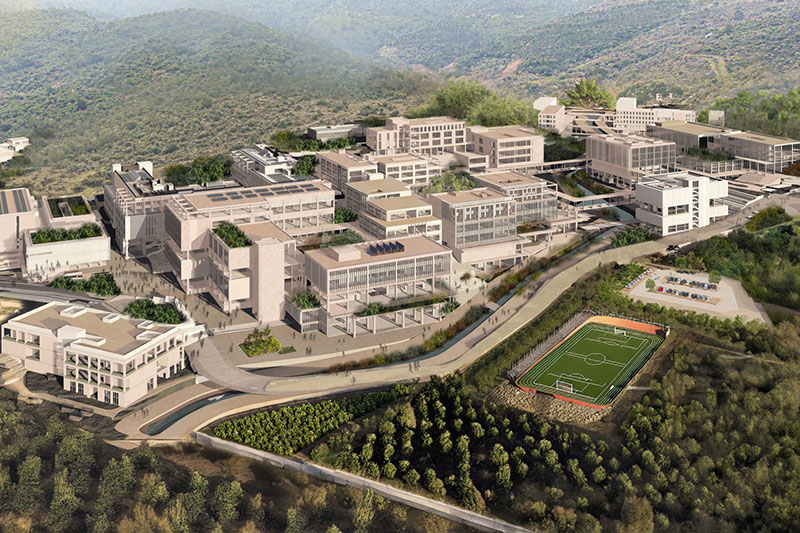
IZMIR UNIVERSITY OF ECONOMICS GÜZELBAHÇE CAMPUS
DetailsGLOBAL CAREER
As Izmir University of Economics transforms into a world-class university, it also raises successful young people with global competence.
More..CONTRIBUTION TO SCIENCE
Izmir University of Economics produces qualified knowledge and competent technologies.
More..VALUING PEOPLE
Izmir University of Economics sees producing social benefit as its reason for existence.
More..
You are one step ahead with your graduate education at Izmir University of Economics.