

Instagram
Facebook
X (Twitter)
YouTube
LinkedIn
TikTok
Logo
My IEU Logo
TR
University
President
Rector
History
Board of Trustees
Administrative Staff
Rectorate
Mission
Scholarship
Collaborations
Quality at IUE
Legislation
Awards
Protection of Personal Data
Gender Equality Plan
Principles and Policies
Academic
Schools
Faculties
Graduate School
Common Courses
  • Vocational School of Justice
  • Vocational School
  • Vocational School of Health Services
  • School of Applied Management Sciences
  • School of Foreign Languages
  • Faculty of Arts and Sciences
  • Faculty of Fine Arts and Design
  • Faculty of Law
  • Faculty of Communication
  • Faculty of Business
  • Faculty of Engineering
  • Faculty of Health Sciences
  • Faculty of Medicine
  • Graduate School
  • Master's Programs in Economics
  • Master's Programs in Law
  • Master's Programs in Communication
  • Graduate Programs in Business
  • Master's Programs in Logistics
  • Graduate Programs in Mathematics
  • Master's Programs in Architecture
  • Graduate Programs in Engineering
  • Graduate Programs in Psychology
  • Health Field
  • Political Science and International Relations Field
  • Master's Programs in Sustainable Energy
  • Graduate Programs in Design Studies
  • Graduate Programs in Foreign Languages
Research
Research Centers
Library
Smart Campus
Technology Transfer Office
İzmir Science Park
Continuous Education Center (EKOSEM)
Children's University
Researcher Training Coordinatorship
Ethics Committee
Teaching and Learning Center (EKOEĞİTİM)
Psychology Application and Research Center
Research Collaborations And Innovation Coordinatorship
Campus
Life at IUE
İzmir
Library
Dormitories and Accommodation
Cafes and Restaurants
Student Clubs
IUE Publisher
Disability Support Center
Health and Counseling Services
INTERNATIONAL
Contact
25TH YEAR
İzmir Ekonomi Üniversitesi
  • University
    • President
    • Rector
    • History
    • Board of Trustees
    • Administrative Staff
    • Rectorate
    • Mission
    • Scholarship
    • Collabrations
    • Quality at IUE
    • Legislation
    • Rewards
    • Protection of Personal Data
    • Gender Equality Plan
    • Principles and Policies
  • Academic
    • Schools/Vocational Schools
      • Vocational School of Justice
        • Vocational School of Justice
        • Department of Justice (Turkish)
        • Department of Legal Office Management and Secretariat
      • Vocational School
        • Vocational School
        • Department of Banking and Insurance (Turkish)
        • Department of Computer Programming (Turkish)
        • Department of Foreign Trade (Turkish)
        • Department of Graphic Design (Turkish)
        • Department of Interior Design (Turkish)
        • Department of Construction Technology (Turkish)
        • Department of Occupational Health and Safety (Turkish)
        • Department of Media and Communication (Turkish)
        • Department of Architectural Restoration (Turkish)
        • Department of Radio and Tv Programming (Turkish)
        • Department of Civil Aviation Cabin Services (Turkish)
        • Department of Civil Aviation Transportation Management (Turkish)
        • Department of Tourism and Hotel Management (Turkish)
        • Department of Applied English Translation
      • Vocational School Of Health Services
        • Vocational School Of Health Services
        • Department of Child Development (Turkish)
        • Department of Physiotherapy (Turkish)
        • Department of Paramedic (Turkish)
        • Department of Opticianry (Turkish)
        • Department of Medical Documentation and Secreteriat (Turkish)
        • Department of Medical Imaging Techniques (Turkish)
        • Department of Medical Laboratory Techniques (Turkish)
        • Department of Elderly Care (Turkish)
      • School of Applied Management Sciences
        • School of Applied Management Sciences
        • Gastronomy and Culinary Arts Program
      • School of Foreign Languages
    • Faculties
      • Faculty of Arts and Sciences
        • Faculty of Arts and Sciences
        • Department of Physics
        • Department of Mathematics
        • Department of English Translation and Interpreting
        • Department of Psychology
        • Department of Sociology
      • Faculty of Fine Arts and Design
        • Faculty of Fine Arts and Design
        • Department of Industrial Design
        • Department of Visual Communication Design
        • Department of Interior Architecture and Environmental Design
        • Department of Architecture
        • Department of Textile and Fashion Design
      • Faculty of Law
      • Faculty of Communication
        • Faculty of Communication
        • Department of Public Relations and Advertising
        • Department of Cinema and Digital Media
        • Department of New Media and Communication
      • Faculty of Business
        • Faculty of Business
        • Department of Economics
        • Department of Business Administration
        • Department of Logistics Management
        • Accounting and Auditing Program
        • Department of Political Science and International Relations
        • Department of International Trade and Finance
      • Faculty of Engineering
        • Faculty of Engineering
        • Department of Computer Engineering
        • Department of Biomedical Engineering
        • Department of Electrical and Electronics Engineering
        • Department of Industrial Engineering
        • Department of Food Engineering
        • Department of Genetics and Bioengineering
        • Department of Aerospace Engineering
        • Department of Civil Engineering
        • Department of Mechanical Engineering
        • Department of Mechatronics Engineering
        • Department of Software Engineering
      • Faculty of Health Sciences
        • Faculty of Health Sciences
        • Department of Physiotherapy and Rehabilitation
        • Department of Nursing
        • Department of Nutrition and Dietetics
      • Medicine
    • Graduate School
    • Common Courses
  • Research
    • Research Centers
    • Library
    • Smart Campus
    • Technology Transfer Office
    • İzmir Sciencepark
    • Continuous Education Center (EKOSEM)
    • Children's University
    • Ethics Committee
    • Teaching and Learning Center (EKOEĞİTİM)
    • Psychology Application and Research Center
    • Researcher Training Coordinatorship
    • Research Collaborations And Innovation Coordinatorship
  • Campus
    • Life at IUE
    • İzmir
    • Library
    • Health and Counseling Services
    • Dormitories and Accommodation
    • Cafes and Restaurants
    • Student Clubs
    • Disability Support Center
    • IUE Publisher
  • INTERNATIONAL
  • Contact
  • 25TH YEAR
Instagram
Facebook
X (Twitter)
YouTube
LinkedIn
TikTok
  • TÜRKÇE

  • Prospective Student | Student | Alumni

      Search Results...

      FACULTY OF COMMUNICATION

      Department of New Media and Communication

      Menu
      • Main Page
      • Yönetim ve Komisyonlar
      • Accreditation
      • Academic
        • Academic Staff
        • Academic Publications
      • Curriculum
      • General Education Courses
      • Studios
        • Yeni Medya Stüdyosu
        • Auditorium
        • Stüdyo B
        • Podcast Studio
        • Alterlab
      • Education at IUE
      • All News
      • Contact Us
        • Contact Information

      COMM 102 | Course Introduction and Application Information

      Course Name
      Theories of Communication
      Code
      Semester
      Theory
      (hour/week)
      Application/Lab
      (hour/week)
      Local Credits
      ECTS
      COMM 102
      Spring
      2
      2
      3
      5

      Prerequisites
      None
      Course Language
      English
      Course Type
      Required
      Course Level
      First Cycle
      Mode of Delivery face to face
      Teaching Methods and Techniques of the Course Discussion
      Case Study
      Q&A
      Lecture / Presentation
      National Occupation Classification -
      Course Coordinator -
      Course Lecturer(s)
      • Öğr.Gör.Dr. Kenan DEMİREL
      Assistant(s) -
      Course Objectives The theory component of the course aims to introduce the students to the major theories that shape the field of communication studies within their historical contexts. Students will acquire the necessary knowledge to critically reflect on the major paradigms of the last century within media and communication theories. The application component aims to enable students\nto deploy the communication theories and models in the analysis and production of media products.
      Learning Outcomes

      The students who succeeded in this course;

      • discuss the relation between the developments in mass communication processes and their historical conjunctures.
      • define the fundamental models of mass communication.
      • define the fundamental theories of mass communication and their weaknesses and strengths
      • apply the theories discussed in this course to the analysis of a variety of different media texts.
      • make use of the relevant terminology from the field of communication studies when analyzing media texts
      Course Description The course focuses on the media and communication theories that have been developed over the 20 th century and the beginning of the 21 st century. The course adopts a historical perspective when introducing these theories, shedding light not only on the theories and models themselves but also on the socio political context within which they have emerged. The first section of the course focuses on administrative (mainstream media theories) while the second section introduces critical approaches to media and communication. In the application component, the students are expected to use the theories they have learned in their analysis and production of media texts. Within this context, the course includes a two hours-per-week application module. In some weeks students present and critique the media texts they have produced. In others they form groups to engage in hands-on text analysis.
      Related Sustainable Development Goals


      Course Category

      Core Courses
      Major Area Courses
      X
      Supportive Courses
      Media and Management Skills Courses
      Transferable Skill Courses


      WEEKLY SUBJECTS AND RELATED PREPARATION STUDIES

      Week Subjects Related Preparation
      1 Introduction
      2 The mass – Media, Culture and Society Mass media in history Communication Theory, s. 43/59 Winston, B. (1999). “How are media born?”, in Marris, P. and Thornham, S. (eds.) Media Studies: A Reader (2nd edition). Edinburgh Press – pp 786-801.
      3 Early Communication Thories Mattelart, A. & Mattlart, M. (1998). Theories of Communication: A Short Introduction. London: Sage, 19-30.
      4 Main Theories of Communication I
      5 Main Theories of Communication II In-class activity
      6 Marxist Media Theory I Mattelart & Mattelart, Communication Theory, s.57/68
      7 Marxist Media Theory II In-class activity Mattelart & Mattelart, Communication Theory, s.57/68
      8 Midterm
      9 The Culture Industry Theodor Adorno, the culture Industry, s.62/84
      10 The Political Economy of Media Dallas W. Symythe, On the Audience Commodity and its Work, s.230/256
      11 Media and Cultural Studies Stuart Hall, Encoding/Decoding s.164/173
      12 Informationalism and the Network Society I M. Castells, (2009) Communication Power and counter-power in the Network Society, s.238/259 van Dijk, J. (2020). The Network Society. 4th edition. London: SAGEPublications.
      13 Informationalism and the Network Society II In-class activity M. Castells, (2009) Communication Power and counter-power in the Network Society, s.238/259 van Dijk, J. (2020). The Network Society. 4th edition. London: SAGEPublications.
      14 New Approaches in Theories of Communication
      15 Review
      16 Final


      Course Notes/Textbooks

      Mattelart, A.  Mattelart M. (1998) Theories of Communication: A Short Introduction. London, Sage. ISBN: 1446232441, 9781446232446

      Suggested Readings/Materials

      Books:

      • Adorno, T. W., & Horkheimer, M. (2002). Dialectic of enlightenment: Philosophical fragments (E. Jephcott, Trans.). Stanford University Press. (Original work published 1944)
      • Craig, R. T., & Muller, H. L. (Eds.). (2007). Theorizing Communication: Readings Across Traditions. Sage Publications. ISBN: 978-1-4129-5237-8
      • Güngör, N. (2015). İletişim kuramları (3rd ed.). Siyasal Kitabevi. ISBN: 9786057877482
      • Kellner, D. (1995). Media culture: Cultural studies, identity and politics between the modern and the postmodern. Routledge (1–3): pp. 1–85. ISBN: 9780415105743
      • Littlejohn, S. W., Foss, K. A., & Oetzel, J. G. (2021). Theories of human communication (12th ed.). Waveland Press.
      • Mattelart, A., & Mattelart, M. (1998). Theories of communication: A short introduction. Sage.
      • McCombs, M. E., & Shaw, D. L. (1972). The agenda-setting function of mass media. Public Opinion Quarterly, 36(2), 176–187. https://doi.org/10.1086/267990
      • McQuail, D., & Deuze, M. (2020). McQuail’s media and mass communication theory (7th ed.). SAGE.
      • Mosco, V. (2009). The political economy of communication (2nd ed.). SAGE Publications, pp. 51–84. ISBN: 9781412947131
      • Thompson, J. B. (1995). The media and modernity: A social theory of the media. Stanford University Press. ISBN: 978-0804726795


      Articles:

      • Guzman, A. L., & Lewis, S. C. (2020). Artificial intelligence and communication: A human–machine communication research agenda. New Media & Society, 22(1), 70–86.
      • Hancock, J. T., Naaman, M., & Levy, K. (2020). AI-mediated communication: Definition, research agenda, and ethical considerations. Journal of Computer-Mediated Communication, 25(1), 89–100.


      Video contents:

      • CrashCourse. (2018, November 13). Ford, Cars, and a New Revolution: Crash Course History of Science #28 [Video]. YouTube. https://www.youtube.com/watch?v=UPvwpYeOJnI
      • Post Philosophy. (2022, August 11). Frankfurt School - Critical Theory [Video]. YouTube. https://www.youtube.com/watch?v=-7QdGpheT8A
      • The School of Life. (2018, November 13). Ford, Cars, and a New Revolution: Crash Course History of Science #28 [Video]. YouTube. https://www.youtube.com/watch?v=fSQgCy_iIcc
      • YaleCourses. (2009, September 01). 17. The Frankfurt School of Critical Theory [Video]. YouTube. https://www.youtube.com/watch?v=FFpGf7aPXNA


      Blogs:

      • Henkins, H. (2023, September 5). Participatory culture and digital media. Convergence Culture Blog. https://www.henryjenkins.org/


      Podcasts:

      • Branham, S. (Host). (2021, March 15). Semiotics and meaning-making [Audio podcast episode]. In Communication in Focus. Spotify. https://open.spotify.com/show/example 
      • Dubner, S. J. (Host). (n.d.). Freakonomics radio [Audio podcast]. https://freakonomics.com
      • Jenkins, H. (Host). (2020, September 10). Participatory culture and media convergence [Audio podcast episode]. In Media Studies Now. Apple Podcasts.
      • McLuhan, M. (Host). (2019, June 20). The medium is the message: Understanding media theory [Audio podcast episode]. In Media & Society Talks. Google Podcasts. 
      • Smith, L., & Brown, J. (Hosts). (2022, November 5). Symbolic interactionism and social construction [Audio podcast episode]. In Theories of Communication Explained. SoundCloud. 
      • Thompson, R. (Host). (2023, May 12). Uses and gratifications theory in the digital age [Audio podcast episode]. In The Media Lens Podcast. Stitcher.


      Movies:

      • Curtis, A. (Director). (2002). The century of the self [Documentary]. BBC.
      • Bailey, J. (Director). (2019). The great hack [Documentary]. Netflix.
      • Bennett, P. (Director). (1997). Stuart Hall: Representation and the media [Documentary]. Media Education Foundation.
      • Berg, C. (Director). (2010). Inside job [Documentary]. Sony Pictures Classics.
      • Beyer, D. (Director). (2016). Marshall McLuhan: The medium is the message [Documentary]. OnFiction Productions.
      • Carpenter, J. (Director). (1988). They live [Film]. Universal Pictures.
      • Chandor, J. C. (Director). (2011). Moneyball [Film]. Columbia Pictures.
      • Chomsky, N., & Achbar, M. (Directors). (1992). Manufacturing consent: Noam Chomsky and the media [Documentary]. Zeitgeist Films.
      • Cullen, J., Orlowski, J., & Baca, V. (Directors). (2020). The social dilemma [Documentary]. Netflix.
      • Debord, G. (Director). (2016). HyperNormalisation [Documentary]. BBC.
      • Fincher, D. (Director). (2010). The social network [Film]. Columbia Pictures.
      • Fritz, L. (Director). (1927). Metropolis [Film]. UFA.
      • Gilliam, T. (Director). (2012). The pervert’s guide to ideology [Documentary]. Zeitgeist Films.
      • Glazer, C. (Director). (1999). The matrix [Film]. Warner Bros.
      • Herzog, W. (Director). (2016). Lo and behold: Reveries of the connected world [Documentary]. Magnolia Pictures.
      • Jewison, N. (Director). (1976). Network [Film]. MGM.
      • Jonze, S. (Director). (2013). Her [Film]. Warner Bros.
      • Kubrick, S. (Director). (1998). The Truman show [Film]. Paramount Pictures.
      • McGoohan, P. (Director). (1983). Videodrome [Film]. Universal Pictures.
      • Miller, G. (Director). (1987). RoboCop [Film]. Orion Pictures.
      • Morris, M. (Director). (2015). The man who knew infinity [Film]. IFC Films.
      • O’Neill, K. (Director). (2007). The hypodermic needle model of media effects [Video]. Media Education Foundation.
      • Orlowski, J. (Director). (2020). The Social Dilemma [Film]. Exposure Labs; Argent Pictures; The Space Program.
      • Stone, O. (Director). (1989). Do the right thing [Film]. Universal Pictures.
      • Weir, P. (Director). (1998). The Truman Show [Film]. Paramount Pictures
      • Wright, J. (Director). (2016). Nosedive (Season 3, Episode 1) [TV series episode]. In Black Mirror. House of Tomorrow; Netflix.


      Documentaries:

      • Curtis, A. (Director). (2002). The Century of the Self [Documentary]. BBC. 
      • Curtis, A. (Director). (2016). HyperNormalisation [Documentary]. BBC. 
      • Ferguson, C. (Director). (2010). Inside Job [Documentary]. Sony Pictures Classics. 
      • Ferguson, S. (Director). (2019). The Great Hack [Documentary]. Netflix. 
      • Miller, J. (Director). (1992). Manufacturing Consent: Noam Chomsky and the Media [Documentary]. Zeitgeist Films. 
      • Morris, E. (Director). (2012). The Pervert’s Guide to Ideology [Documentary]. Zeitgeist Films. 
      • Rettberg, J. (Director). (2016). Lo and Behold: Reveries of the Connected World [Documentary]. Magnolia Pictures. 
      • Rosenstein, J., & Orlowski, J. (Directors). (2020). The Social Dilemma [Documentary]. Netflix. 
      • Scorsese, M. (Director). (1997). Stuart Hall: Representation and the Media [Documentary]. Media Education Foundation. 
      • Sheen, M. (Director). (1997). Marshall McLuhan: The Medium is the Message [Documentary]. CBC Television.


      Academic journals:

      • Journal of Communication https://academic.oup.com/joc/
      • Journal of Computer-Mediated Communication https://academic.oup.com/jcmc/
      • Communication Theory https://academic.oup.com/ct
      • Türkiye İletişim Araştırmaları Dergisi https://dergipark.org.tr/tr/pub/turcom
      • Galatasaray Üniversitesi İletişim Dergisi http://iletisimdergisi.gsu.edu.tr/tr/
      • İletişim Çalışmaları Dergisi https://dergipark.org.tr/tr/pub/icd


      Games:

      • Crows Crows Crows. (2022). The Stanley Parable: Ultra Deluxe [Video game]. Crows Crows Crows.
      • Pope, L. (2013). Papers, Please [Video game]. 3909 LLC.
      • Wreden, D. (2015). The Beginner's Guide [Video game]. Everything Unlimited Ltd.


      Music:

      • Pink Floyd. (1979). Another brick in the wall, Part 2 [Song]. On The wall. Harvest Records.
      • Radiohead. (1997). Fitter happier [Song]. On OK computer. Parlophone.
      • Childish Gambino. (2018). This is America [Song]. mcDJ Recording/RCA Records.

      The Buggles. (1979). Video killed the radio star [Song]. On The age of plastic. Island Records.


      EVALUATION SYSTEM

      Semester Activities Number Weigthing
      Participation
      1
      10
      Laboratory / Application
      Field Work
      Quizzes / Studio Critiques
      2
      15
      Portfolio
      Homework / Assignments
      Presentation / Jury
      1
      20
      Project
      Seminar / Workshop
      1
      Oral Exams
      Midterm
      1
      25
      Final Exam
      1
      30
      Total

      Weighting of Semester Activities on the Final Grade
      4
      70
      Weighting of End-of-Semester Activities on the Final Grade
      1
      30
      Total

      ECTS / WORKLOAD TABLE

      Semester Activities Number Duration (Hours) Workload
      Theoretical Course Hours
      (Including exam week: 16 x total hours)
      16
      2
      32
      Laboratory / Application Hours
      (Including exam week: '.16.' x total hours)
      16
      2
      32
      Study Hours Out of Class
      14
      3
      42
      Field Work
      0
      Quizzes / Studio Critiques
      2
      7
      14
      Portfolio
      0
      Homework / Assignments
      0
      Presentation / Jury
      1
      8
      8
      Project
      0
      Seminar / Workshop
      0
      Oral Exam
      0
      Midterms
      1
      8
      8
      Final Exam
      1
      14
      14
          Total
      150


      COURSE LEARNING OUTCOMES AND PROGRAM QUALIFICATIONS RELATIONSHIP

      #
      Program Competencies/Outcomes
      * Contribution Level
      1
      2
      3
      4
      5
      1

      To be able to critically discuss and interpret the theories, concepts and ideas that form the basis of the discipline of new media and communication.

      -
      -
      -
      -
      X
      2

      To be able to critically interpret theoretical debates concerning the relations between the forms, agents, and factors that play a role in the field of new media and communication.

      -
      -
      X
      -
      -
      3

      To have the fundamental knowledge and ability to use the technical equipment and software programs required by the new media production processes.

      -
      -
      -
      -
      -
      4

      To be able to gather, scrutinize and scientifically investigate data in the processes of production and distribution.

      -
      -
      -
      -
      -
      5

      To be able to use the acquired theoretical knowledge in practice.

      -
      -
      -
      -
      -
      6

      To be able to take responsibility both individually and as a member of a group to develop solutions to problems encountered in the field of new media and communication.

      -
      -
      -
      -
      -
      7

      To be informed about national, regional, and global issues and problems; to be able to generate problem-solving methods depending on the quality of evidence and research, and to acquire the ability to report the conclusions of those methods to the public.

      -
      -
      -
      -
      -
      8

      To be able to critically discuss and draw on theories, concepts and ideas that form the basis of other disciplines complementing the field of new media and communication studies.

      -
      X
      -
      -
      -
      9

      To be able to develop and use knowledge and skills towards personal and social goals in a lifelong process.

      -
      -
      -
      -
      -
      10

      To be able to apply social, scientific and professional ethical values in the field of new media and communication.

      -
      -
      -
      -
      -
      11

      To be able to collect datain the areas of new media and communication and communicate with colleagues in a foreign language ("European Language Portfolio Global Scale", Level B1).

      -
      -
      -
      -
      -
      12

      To be able to speak a second foreign language at a medium level of fluency efficiently.

      -
      -
      -
      -
      -
      13

      To be able to relate the knowledge accumulated throughout the human history to their field of expertise.

      -
      X
      -
      -
      -

      *1 Lowest, 2 Low, 3 Average, 4 High, 5 Highest


      NEWSALL NEWS

      A Half-Century-Old Film Comes Back to Life
      A Half-Century-Old Film Comes Back to Life

      Dr. Alper Gedik, a lecturer in the Department of New Media and Communication at Izmir University of Economics (IUE), has ...

      Related SDG:
      4
      9
      17
      Detail
      • WhatsApp
      • Linkedin
      • Twitter
      • Facebook
      ‘AI Slop’ Warning
      ‘AI Slop’ Warning

      Asst. Prof. Dr. Sarphan Uzunoğlu, faculty member at Izmir University of Economics (IUE), Department of New Media and Communication, has ...

      Related SDG:
      10
      12
      Detail
      • WhatsApp
      • Linkedin
      • Twitter
      • Facebook
      Migration and Disinformation Discussed at IUE
      Migration and Disinformation Discussed at IUE

      Students of the Izmir University of Economics (IUE) Department of New Media and Communication attended an event organized within the ...

      Related SDG:
      4
      10
      16
      Detail
      • WhatsApp
      • Linkedin
      • Twitter
      • Facebook
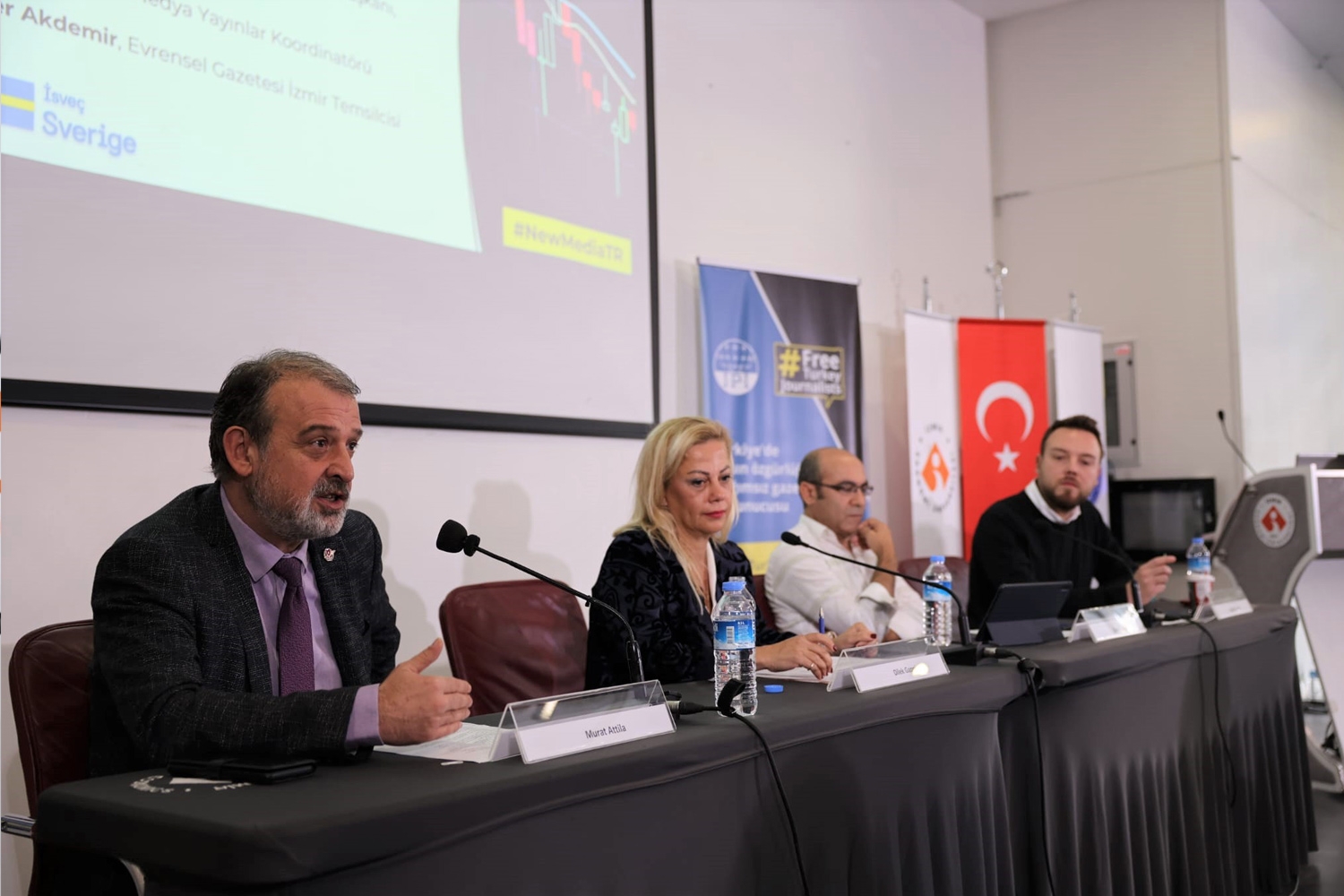
      ‘Media’ Summit at Izmir University of Economics
      ‘Media’ Summit at Izmir University of Economics

      International Press Institute (IPI) organized a symposium on ‘Economy and Financial Sustainability of Media’ hosted by Izmir University of Economics ...

      Detail
      • WhatsApp
      • Linkedin
      • Twitter
      • Facebook
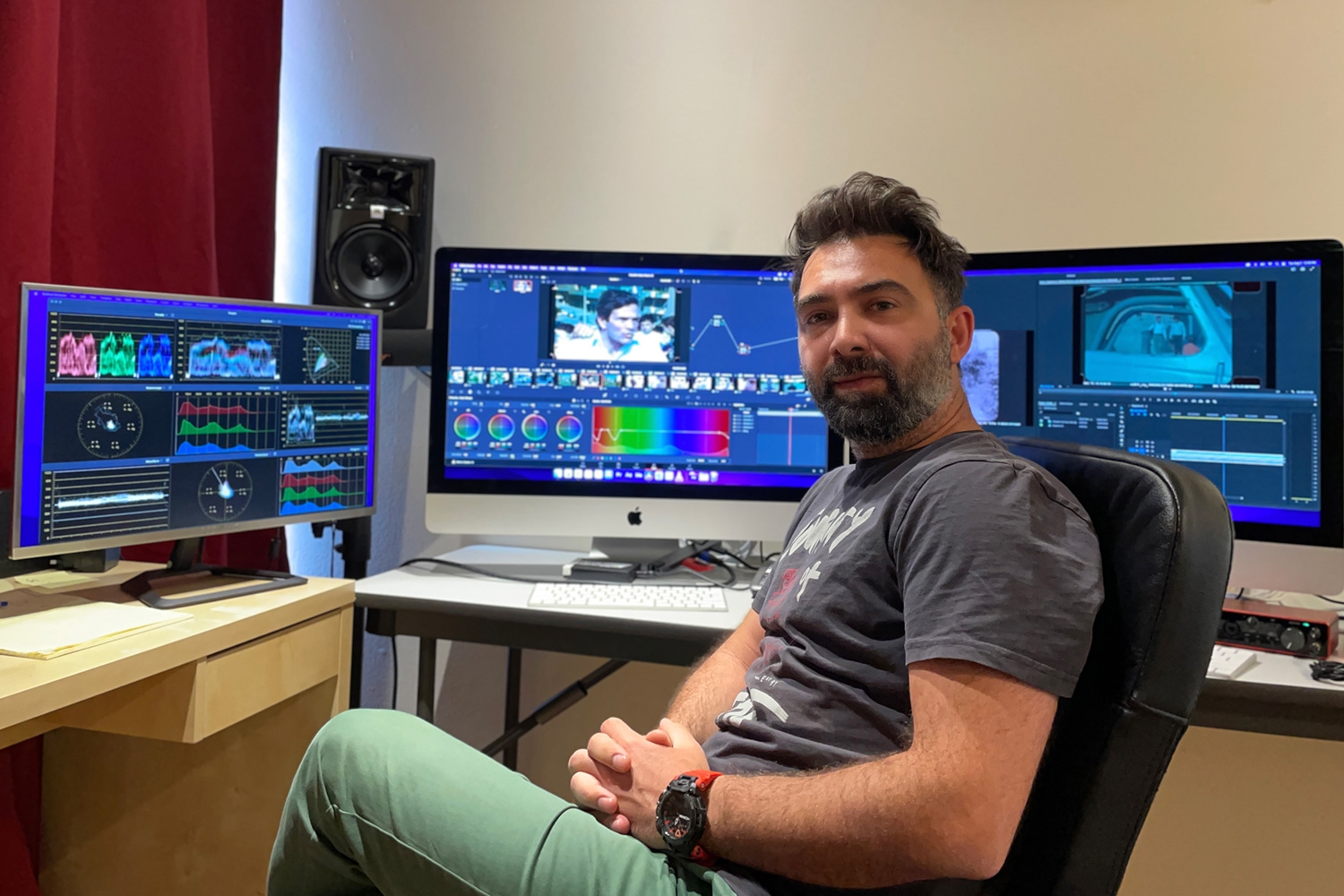
      Received a special invitation from the USA for the Italian director's documentary
      Received a special invitation from the USA for the Italian director's documentary

      Dr. Alper Gedik, Lecturer at Department of New Media and Communication, Izmir University of Economics (IUE), went to the USA ...

      Detail
      • WhatsApp
      • Linkedin
      • Twitter
      • Facebook
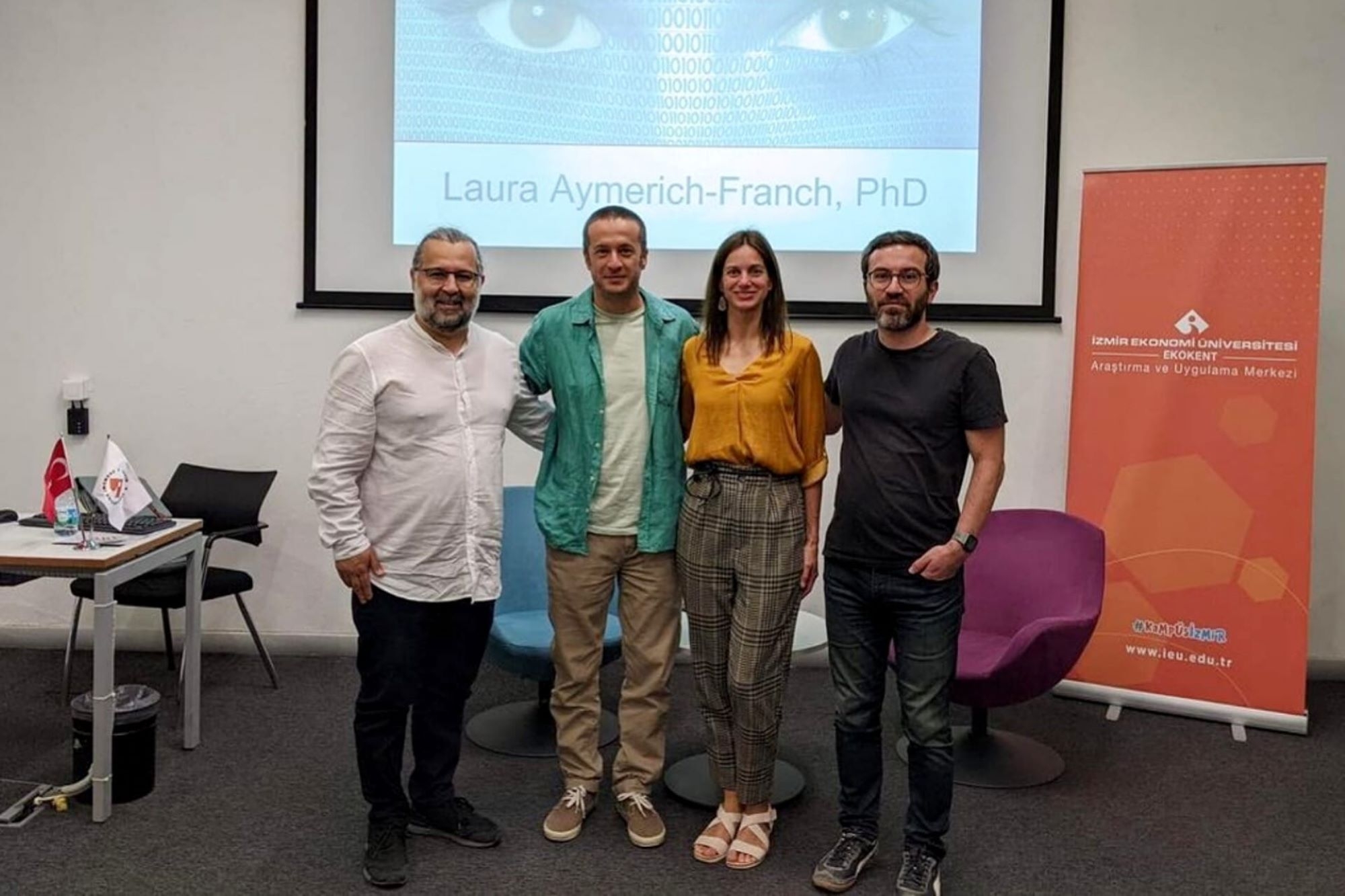
      Laura Aymerich-Franch visited our department
      Laura Aymerich-Franch visited our department

      Laura Aymerich-Franch who is currently a senior research fellow at Pompeu Fabra University (Barcelona) was a visiting scholar in the ...

      Detail
      • WhatsApp
      • Linkedin
      • Twitter
      • Facebook
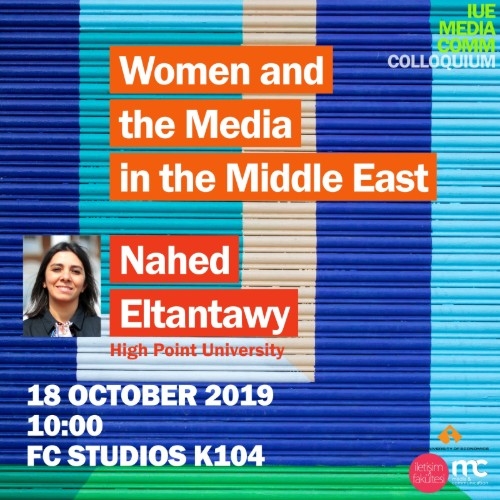
      Women and the Media in the Middle East
      Women and the Media in the Middle East

      Assoc. Prof. Dr. Nahed Eltantawy, who will be visiting the Media and Communication Department as a part of the Fulbright ...

      Detail
      • WhatsApp
      • Linkedin
      • Twitter
      • Facebook
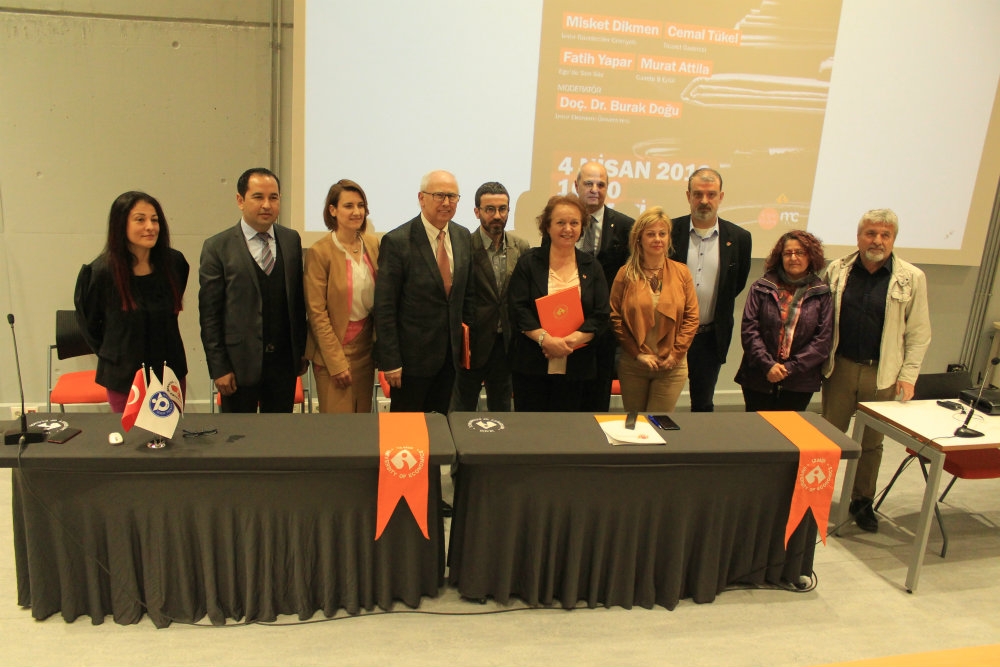
      A Partnership Agreement between the Department of Media and Communication and Izmir Journalists Association
      A Partnership Agreement between the Department of Media and Communication and Izmir Journalists Association

      “Local Media in Izmir”, a panel organized by the Department of Media and Communication, Izmir University of Economics, was held ...

      Detail
      • WhatsApp
      • Linkedin
      • Twitter
      • Facebook

      IZMIR UNIVERSITY OF ECONOMICS GÜZELBAHÇE CAMPUS

      Details

      GLOBAL CAREER

      As Izmir University of Economics transforms into a world-class university, it also raises successful young people with global competence.

      More..

      CONTRIBUTION TO SCIENCE

      Izmir University of Economics produces qualified knowledge and competent technologies.

      More..

      VALUING PEOPLE

      Izmir University of Economics sees producing social benefit as its reason for existence.

      More..

      BENEFIT TO SOCIETY

      Transferring 25 years of power and experience to social work…

      More..
      You are one step ahead with your graduate education at Izmir University of Economics.

      Master Programs Doctorate Programs
      You are one step ahead with your graduate education at Izmir University of Economics.

      Master Programs Doctorate Programs
      Community of Mediterranean Universities (CMU)
      European University Association (EUA)
      International Association of Universities (IAU)
      Magna Charta Universitatum (MCU)
      Mesleki Yeterlilik Kurumu (MYK)
      Network of International Cooperation Exchange (NICE)
      QS World University Rankings
      UN Sustainable Development Solutions Network (SDSN)
      Times Higher Education (THE) Impact Rankings
      Times Higher Education (THE) World University Rankings
      Türkiye Yeterlilikler Çerçevesi (TYÇ)
      Yükseköğretim Kalite Kurulu (YÖKAK)
      Izmir University of Economics
      is an establishment of
      izto logo
      Izmir Chamber of Commerce Health and Education Foundation.
      ito vakfı logo
      Logo

      İzmir Ekonomi Üniversitesi
      Sakarya Caddesi No:156
      35330 Balçova - İzmir / TÜRKİYE

      kampus İzmir

      Instagram
      Facebook
      X (Twitter)
      YouTube
      LinkedIn
      TikTok
      • University
      • LIFE at IUE
      • CAMPUS LIFE
      • UNIVERSITY IS LIVED IN IZMIR
      • PATENTS
      • CampusIzmir
      • STUDIOS AND LABORATORIES
      • Technology Transfer Office
      • Library
      • Career
      • Children's University
      • Contact

      İEU © All rights reserved.

      İEU